
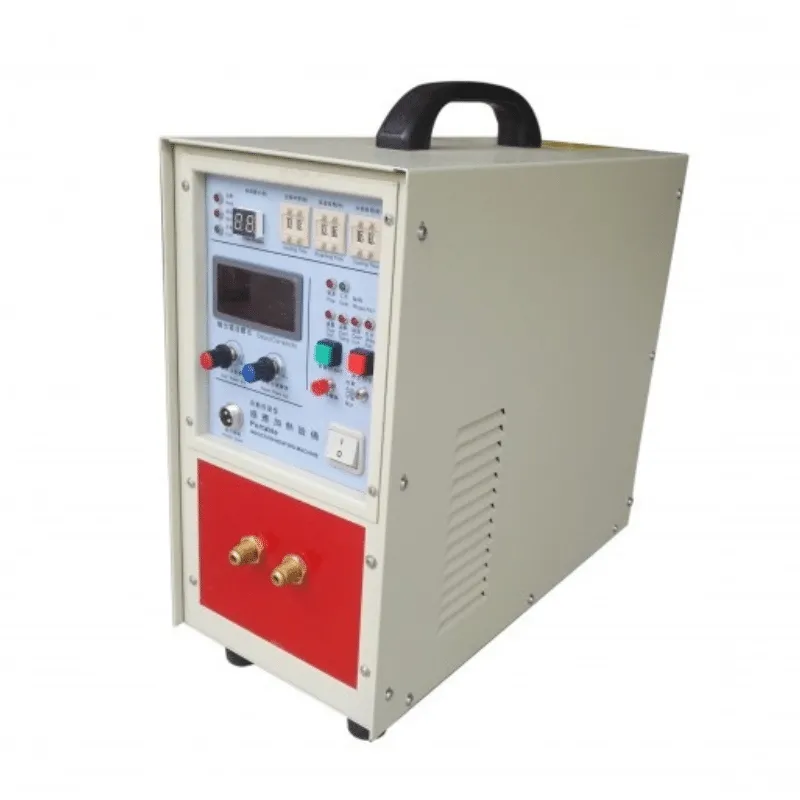
Description
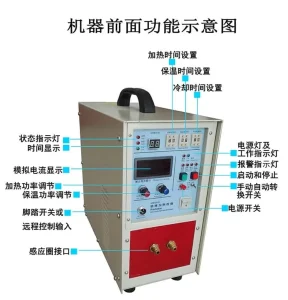
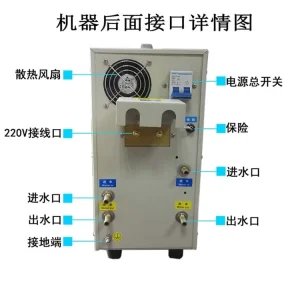
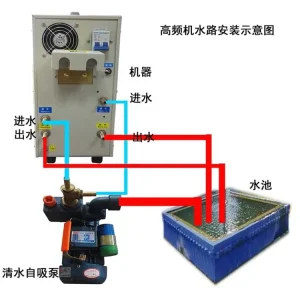
Key Technical Parameters:
1. Maximum Oscillation Power: 15KVA
2. Maximum Rated Input Power: 7KW
3. Oscillation Frequency: 30–100KHZ
4. Input Voltage: Single-phase 220V, 50 or 60HZ
5. Cooling Water Requirements: 0.2Mpa, 2–5 L/min
6. Duty Cycle: 80%
7. Timing Function for HY-15A Automatic Control Model: Heating Time, Holding Time, Cooling Time: 1–99 seconds
8. Cable Length for Split Main-Sub Unit Connection: 2 meters
Key Features:
1. Utilizes MOSFET power devices and our proprietary current conversion control technology;
2. Simplest, lightest, and most cost-effective equipment design;
3. Intuitive operation, mastered in minutes;
4. Simple installation—just connect power and water; no professional installation required;
5. Automatic control models allow adjustment of heating/holding power and duration, enhancing heating consistency and simplifying operator tasks;
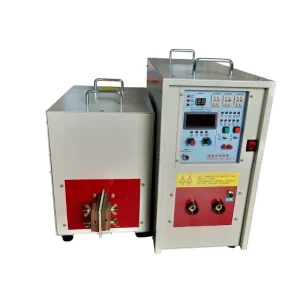
6. Split-type models are primarily used in harsh working environments such as dirty, high-temperature, or corrosive conditions.
High-Frequency Induction Heating Equipment Applications:
1. Heat Treatment (Surface Hardening): Primarily alters the hardness of metal materials through heating processes: local or full hardening, annealing, tempering, and through-hardening of various metals.
2. Welding (Brazing, Silver Brazing, Copper Brazing): This process melts filler metal by heating to a specific temperature, joining metals of the same or different materials. Applications include brazing various metal products, welding carbide tools and saw teeth, joining steel/copper pipes, and bonding dissimilar metals.
3. Hot Forging and Forming: This process involves heating the workpiece to a specific temperature (varying by material composition) and then shaping it into a desired form using presses, forging machines, or other tools. Applications include full-length forging of metal bars, localized forging, hot upsetting, and hot rolling.
4. Metal Smelting: This process involves heating metals to high temperatures to liquefy them, including (vacuum) smelting of metals such as gold, silver, copper, iron, steel, and aluminum; powder metallurgy sintering; and metal smelting.
5. Thermal Joining: (e.g., motor rotors) This primarily involves connecting dissimilar metals or metals with non-metals by heating the metal components. Utilizing the principles of thermal expansion or thermal fusion, the two materials are joined together. Applications include bottle mouth heat sealing, toothpaste tube heat sealing, powder coating, metal embedding in plastics, and other scenarios requiring metal heating.
Reviews
There are no reviews yet.